
Independent Technology Supporting High-End Precision Manufacturing — Hyperline 30W UV Femtosecond Laser Wins the Ringier Technology Innovation Award
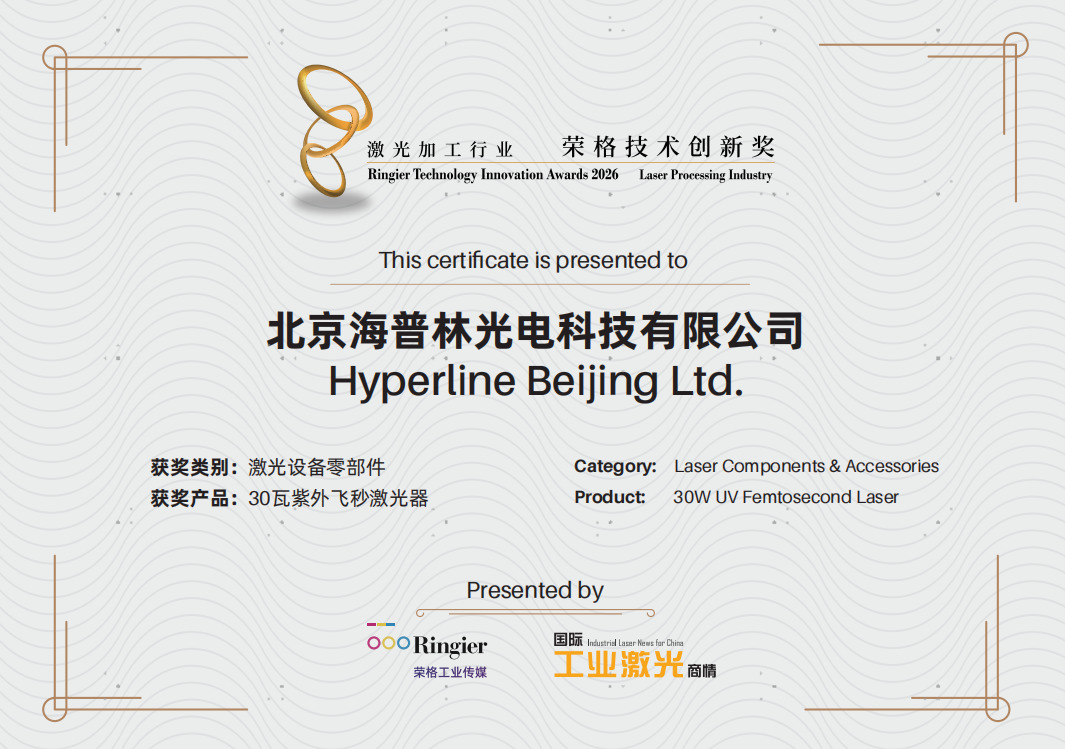
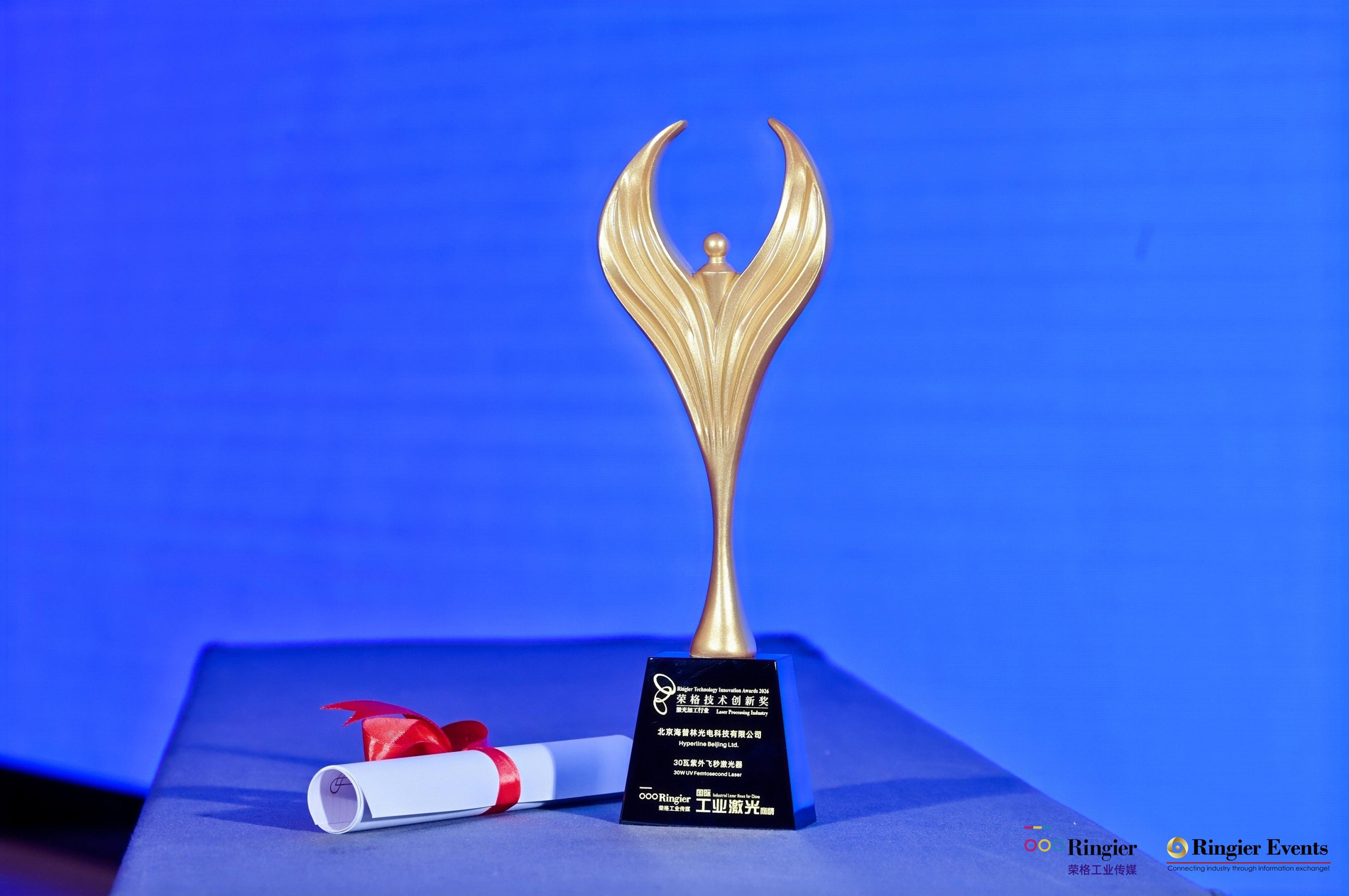
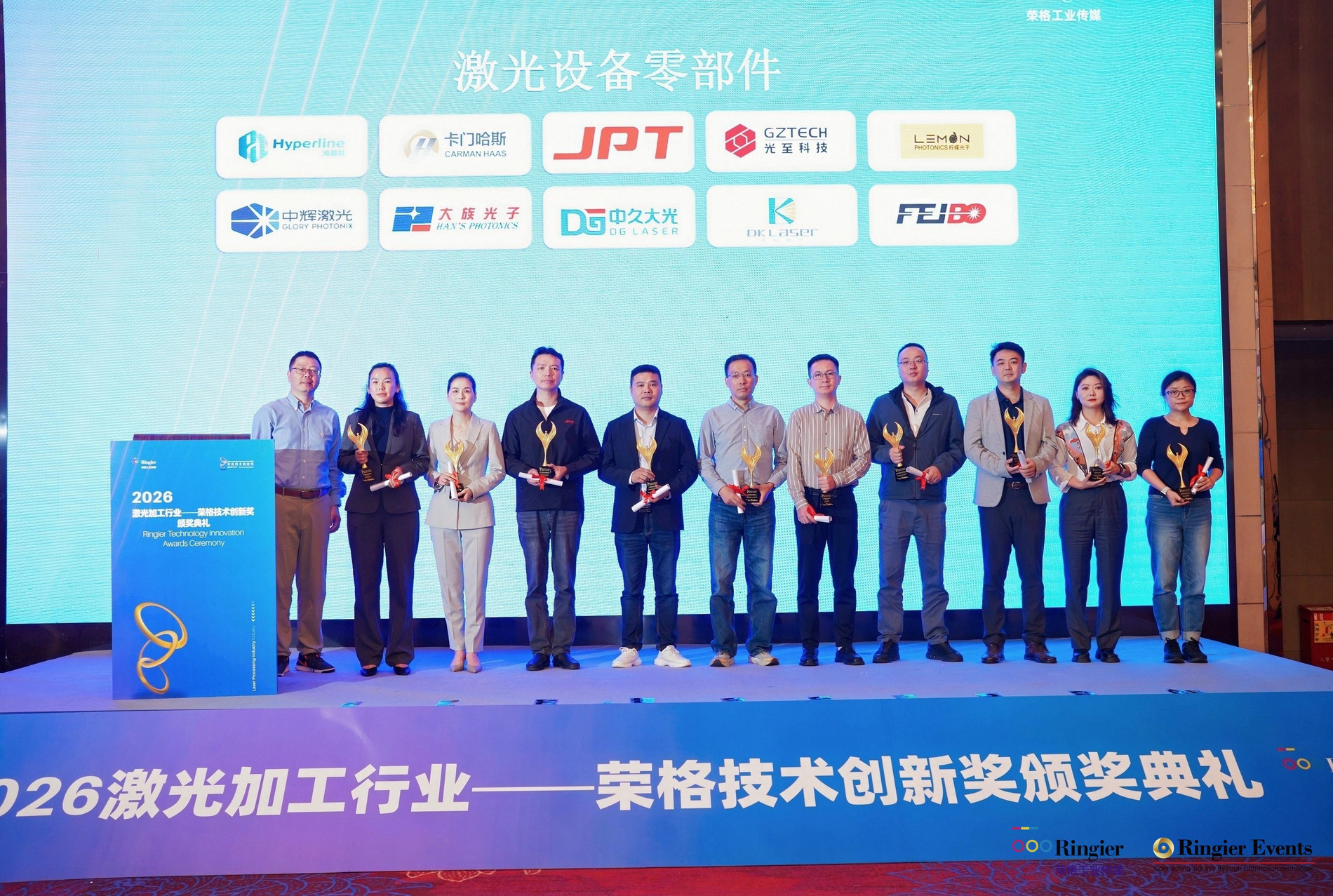
On October 30, the Hyperline 30W UV femtosecond laser won the Ringier Technology Innovation Award. The award recognizes Hyperline's R&D achievements in high-power UV femtosecond laser technology, engineering reliability and industrialization, and marks new progress by domestically developed high-power UV femtosecond lasers in high-end precision processing.
As semiconductor, display panel, consumer electronics and new-energy industries continue to advance toward higher precision and efficiency, materials such as wafers, glass, sapphire and flexible circuit boards place higher demands on heat impact, edge quality and consistency during processing. With its short wavelength, high peak power and extremely short pulse width, UV femtosecond laser achieves high-quality material removal within a minimal heat-affected zone, offering a new light-source option for micro cutting, drilling, scribing and other processes.
In the precision processing landscape of semiconductors and display panels, UV-band femtosecond lasers were long marked by an "imported scale". The high-end market was long dominated by international vendors, with high equipment prices, long delivery cycles and supply chains subject to others — independent control of key process equipment became an unavoidable lesson in industrial upgrading.
At the award ceremony, the head of Hyperline's East China sales said: "Facing the industrialization needs of high-power UV femtosecond lasers, Hyperline insists on independent R&D, continuously tackling key technologies around amplifier architecture, nonlinear frequency conversion, beam quality control and system stability, driving the product from laboratory validation to large-scale application, and providing customers with domestic solutions that balance power, precision and long-term operational reliability."
Core Technology: Balancing Power, Beam Quality and Frequency Conversion Efficiency
The design of a high-power UV femtosecond laser must simultaneously address pulse energy increase, nonlinear effect control, optical component lifetime and UV output stability. The Hyperline 30W UV femtosecond laser is based on CPA (chirped pulse amplification) technology with a hybrid fiber and solid-state amplifier architecture: the fiber amplification stage provides a stable, low-noise pulse foundation for the seed source, while the solid-state amplification stage further increases energy and average power and controls nonlinear effects, balancing high-power output with good beam quality. In the frequency conversion stage, the product adopts efficient third-harmonic generation technology, with an infrared-to-UV conversion efficiency exceeding 28%. Combined with optimized designs for UV optical components and opto-mechanical structures, the system reduces the impact of coating degradation, optical path drift and other factors on long-term operation.
Key product parameters:
- Center wavelength: 343 nm
- Average power: 30 W
- Pulse width: 500 fs
- Repetition rate: flexibly tunable from 1 kHz to 800 kHz
- Maximum pulse energy: 37.5 μJ
- Beam quality: M² ≤ 1.3
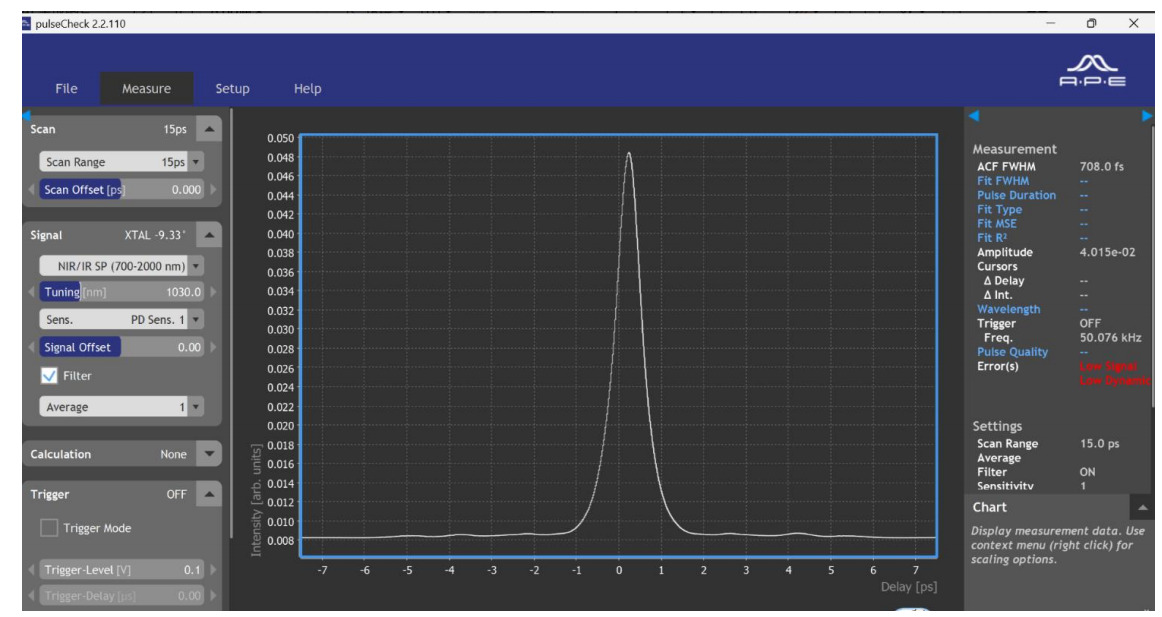
Pulse width 500 fs = 708 ps / 1.414 (Gauss fit)
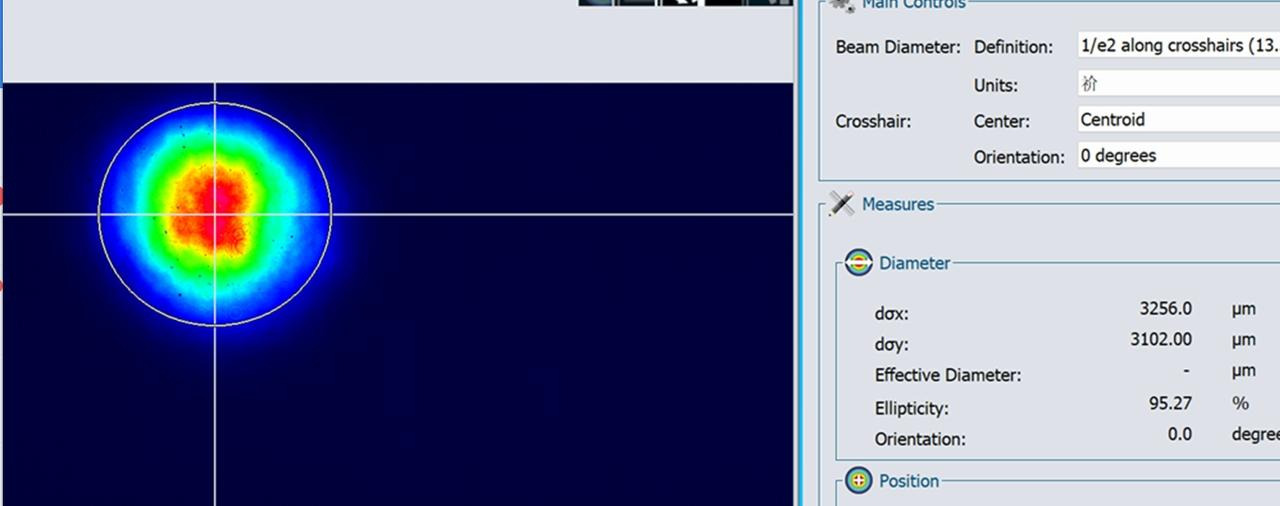
Spot profile (at 500 mm from the output port)
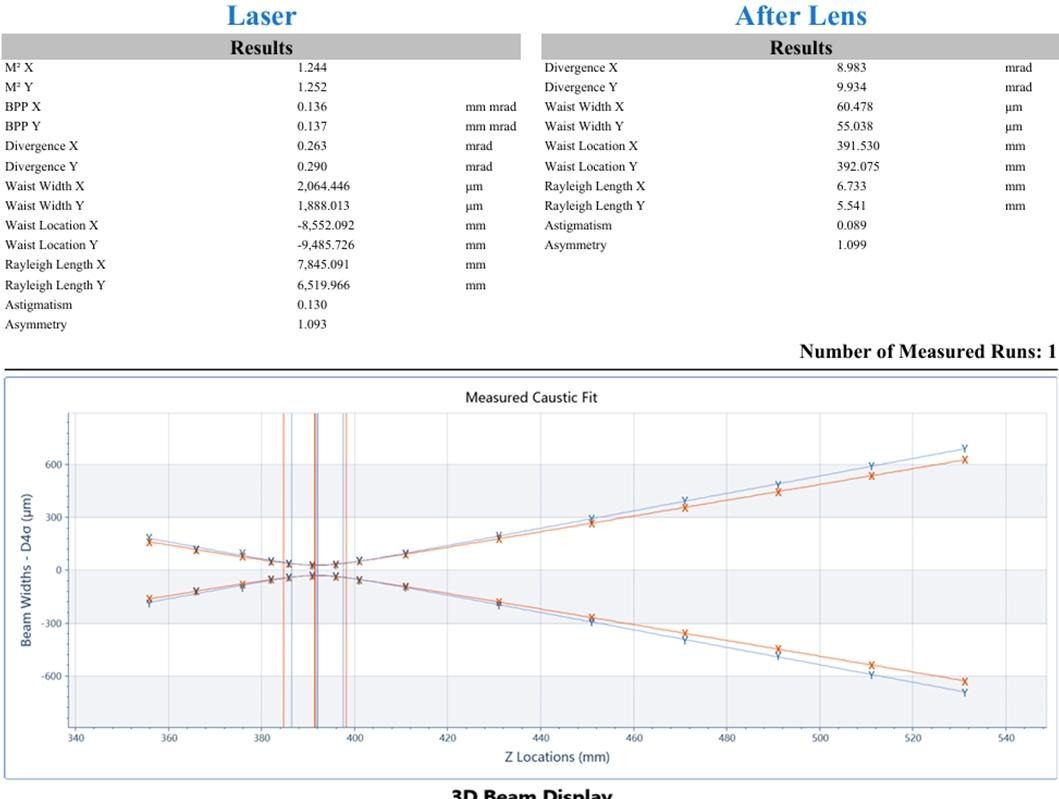
Beam quality M²
Stability Design: Engineering Capability for Continuous Production
For industrial customers, the value of a laser lies not only in peak parameters but also in output consistency and ease of maintenance over long-term operation. The Hyperline 30W UV femtosecond laser supports 24/7 continuous operation and features an intelligent control system that identifies femtosecond pulse status and performs closed-loop monitoring and optimization of key operating parameters. The system supports one-key calibration, real-time operational data logging and remote status viewing, facilitating equipment integration, process maintenance and production management.
Under specified test conditions, both pulse energy stability and average power stability are better than 1% RMS (24 h), supporting process consistency in continuous production. Stability is the bottom line of industrialization — and the ticket to domestic substitution.
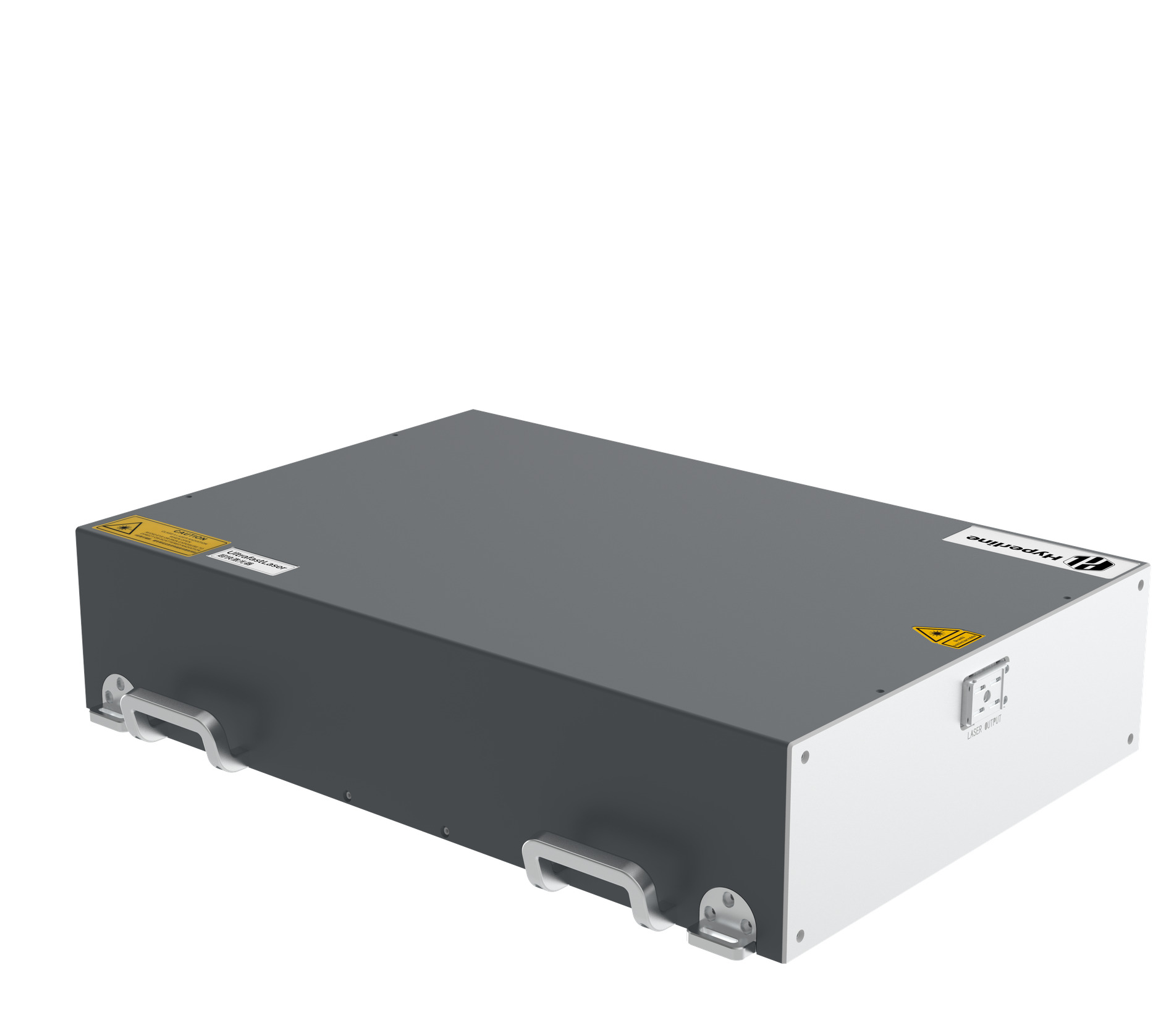
▲ Hyperline 30W UV femtosecond laser
Empowering Industries Everywhere: The "Cold Processing" Revolution from Screens to Wafers
The UV band offers higher photon energy and smaller focused spot size; combined with the low thermal diffusion of femtosecond pulses, it effectively reduces the heat-affected zone during processing and improves edge quality and microstructure forming. According to application test data, in semiconductor wafer cutting, edge chipping can be controlled within 5 μm; in memory chip manufacturing applications, wafer dicing yield improved from 88% to 98% with cutting costs reduced by 60%. Actual results vary with material systems, processing parameters and equipment configuration.
The Hyperline 30W UV femtosecond laser has been applied in OLED profiling cuts, 5G antenna module (LCP/MPI) cutting, FPC material cutting and drilling, ITO drilling and scribing, as well as glass and sapphire cutting and drilling, with deployments on multiple volume production lines in panel display, semiconductor packaging, consumer electronics and precision processing.
From Standalone Products to Supply-Chain Synergy
The industrialization of high-power UV femtosecond lasers also places higher demands on core optical components, nonlinear crystals, UV optics and precision opto-mechanical structures. Around product R&D and delivery, Hyperline continues to promote the localization of key components and related processes, enhancing supply-chain synergy and delivery control.
Winning the Ringier Technology Innovation Award is an affirmation of Hyperline's R&D and engineering capabilities. Going forward, Hyperline will continue to improve its ultrafast laser products and process service system for semiconductors, display panels, consumer electronics, new energy and advanced precision manufacturing, supporting the upgrading of high-end manufacturing with more stable and efficient domestic light sources.